84000's translations are free and open to anyone, anywhere. See how they're showing up in university classrooms.
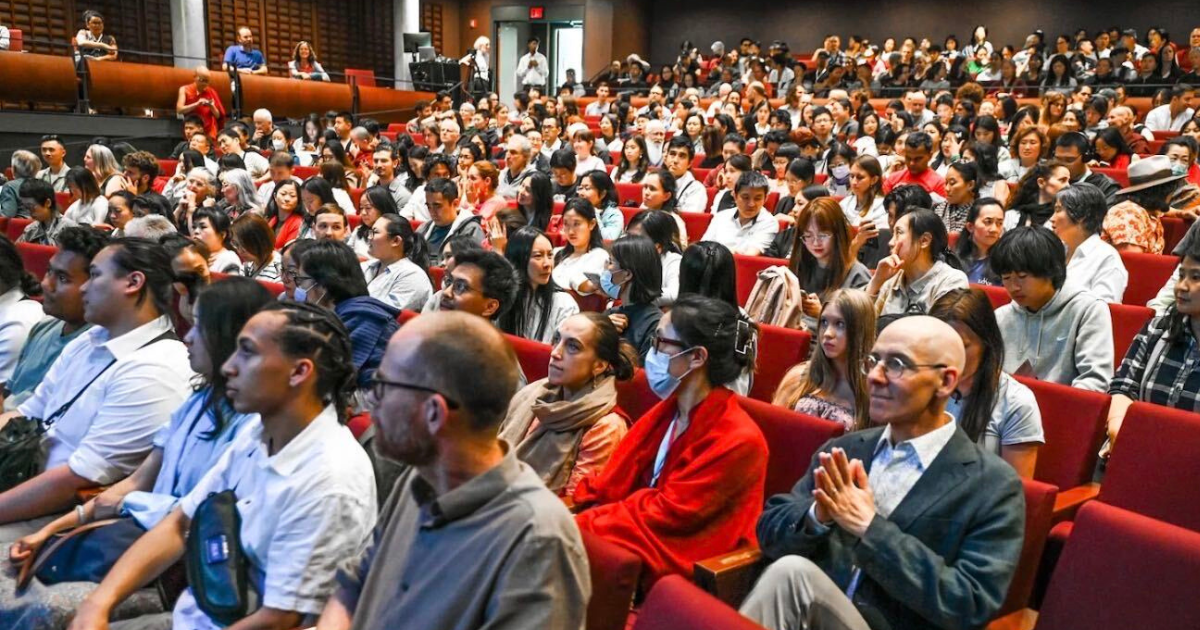
Photo: M. Tiutiunyk / Ho Centre for Buddhist Studies at the University of Toronto. From a lecture held in collaboration with 84000.
84000's translations and resources are made for everyone. Aspiring translators use them to learn the craft, practitioners turn to them for study and practice, and readers come to them out of curiosity. Our mission isn't just to translate the Buddha's words; it's to make them available, so that everyone can benefit from them: read them, share them, think them over, teach them, integrate them, experience them, live by them. Our translation team includes translators and editors from different backgrounds: some are Dharma teachers, others are university professors, and some have brought 84000's materials into their own courses, drawing on finished translations or on the process of making one. Here is how it looked in four classrooms.
Class: Buddhism
University: Washington and Lee University
Taught by: Dr. Annie Heckman
Dr. Annie Heckman taught an undergraduate course on Buddhism at Washington and Lee University, a class open to students in any year. She assigned 84000’s translations alongside the textbook to match what the class was studying: The Play in Full for the life of the Buddha; The Transformation of Karma for rebirth and karma; The Sūtra of the Wheel of Dharma and The Hundred Deeds for early Buddhist teachings and developments; The Heart of the Perfection of Wisdom, the Blessed Mother, popularly known as The Heart Sūtra, when the class took up emptiness; and The Sūtra on the Three Bodies for Buddha body theory.
She put 84000 texts up front on purpose. Freely available translations with full glossaries made her syllabus easier to plan. And for students new to Buddhist texts, she says, having "one reliable format to familiarize themselves with a type of source that may be entirely new to them" makes a real difference. Reading the first pieces together let the class explore the parts of a Buddhist text, with "extra digital and explanatory supports" close at hand. After that, "other sources in the same format were more approachable, and by the end of the course students were comfortable reading Buddhist sources in a wide range of publication formats."
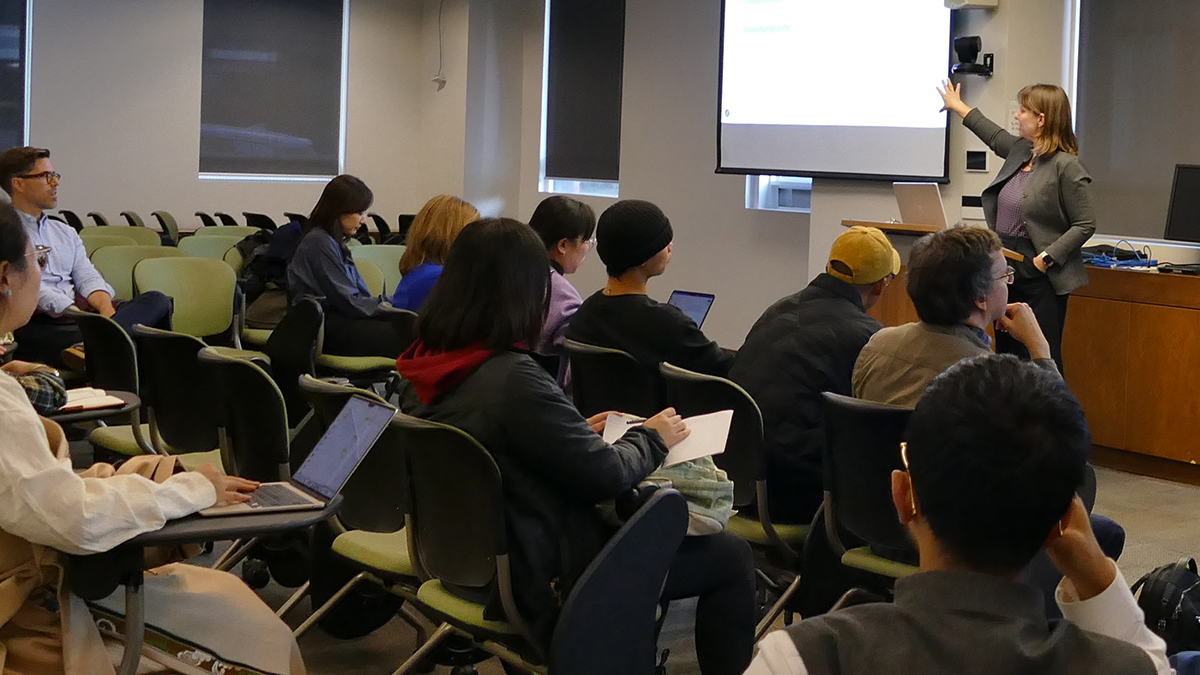
Dr. Heckman also wanted students to get a sense of how translations like these come into the world: what a translator's education might look like, and how sponsorship has helped such texts reach people around the world.
In the Winter 2027 term, Dr. Heckman will teach a new course at Washington and Lee, "Buddhism in Fact, Fiction, and Film," which she is developing now. Dr. Heckman is also a visual artist, and taught drawing, digital, and video art for several years before she started to study Buddhist texts. She often uses examples from popular culture to help her students understand Buddhist doctrine, and now this course allows her to explore Buddhism and cinema with her students in a new way. Here is the course description:
This course considers: (1) the life of the Buddha as it has been presented in texts, artworks, and films dating back to the early days of cinema; and (2) the role of Buddhist thought and traditions in modern and contemporary films from a diversity of genres (documentary, science fiction, romantic comedy, etc.). A survey of Buddhist doctrines and practices is offered as a foundation for these examinations. Particular attention is paid to “insider” and “outsider” depictions of Buddhist meditation, cosmology, and metaphysics.
This course is modeled on a course on the life of Jesus in film and literature created by her senior colleague Dr. Alexandra R. Brown, a New Testament scholar. With the inspiration and help of her department head, Dr. Jeffrey Kosky, Dr. Heckman is excited to build something new alongside other scholars, and to have access to "such rich and readily available resources" on Buddhist canonical sources, including 84000's translations.
Class: Buddhist Philosophy of Mind
University: University of Wisconsin-Madison, Department of Philosophy
Taught by: Dr. Jeremy Manheim
Dr. Jeremy Manheim teaches Buddhist philosophy in the University of Wisconsin Philosophy Department, where he intertwines 84000 sūtras, arguments from Buddhist philosophy, and contemporary questions around ethics, personal identity, and consciousness. Last spring, he taught an introduction to Buddhist philosophy centered on questions of attention and distraction, questions that trace back to one of Buddhism's oldest concerns: why do we suffer? Students began with The Sūtra of the Wheel of Dharma (Toh 337), reflecting on the nature of suffering itself before turning to its possible causes: belief in a self, subject-object duality, conceptuality, or other sources of error. From there, the course combined close reading of 84000 sūtra translations with careful argumentation, exploring how attention is both a built-in part of the mind and an essential feature of the path. Students used their analysis of attention to notice its opposite, distraction, more fully, and to question the role it plays in our lives. Is distraction part of what makes us suffer? And, turning the lens to the present, in what ways does the "attentional economy" use distraction to exploit and profit from our attention? Together, students brought these questions to their reading of Unraveling the Intent (Toh 106) and other 84000 sūtra translations, as they sought ways to recover attention.
This Fall, Dr. Manheim will be teaching a new seminar, “Buddhist Philosophy of Mind,” where students use Buddhist logic and epistemology to explore and reassess what counts as genuine wisdom. As artificial intelligence eclipses human intelligence in certain key tasks, students tackle whether human intelligence also has the capacity for an altogether different kind of wisdom. Over the course of the semester, students will grapple with this big question by progressively reflecting on several of Buddhist philosophy’s key questions: What is consciousness? Is it unitary, or an assemblage of different factors? Can we have experience with no object? And, finally, might such non-dual experience offer us wisdom? Alongside The Sūtra on Wisdom at the Hour of Death (Toh 122) and several other 84000 translations read together in class, students will also explore the Reading Room on their own throughout the semester, discovering new teachings and bringing fresh questions into the classroom.
Class: Tibetan Buddhist Canons
University: University of Toronto
Taught by: Dr. Rory Lindsay
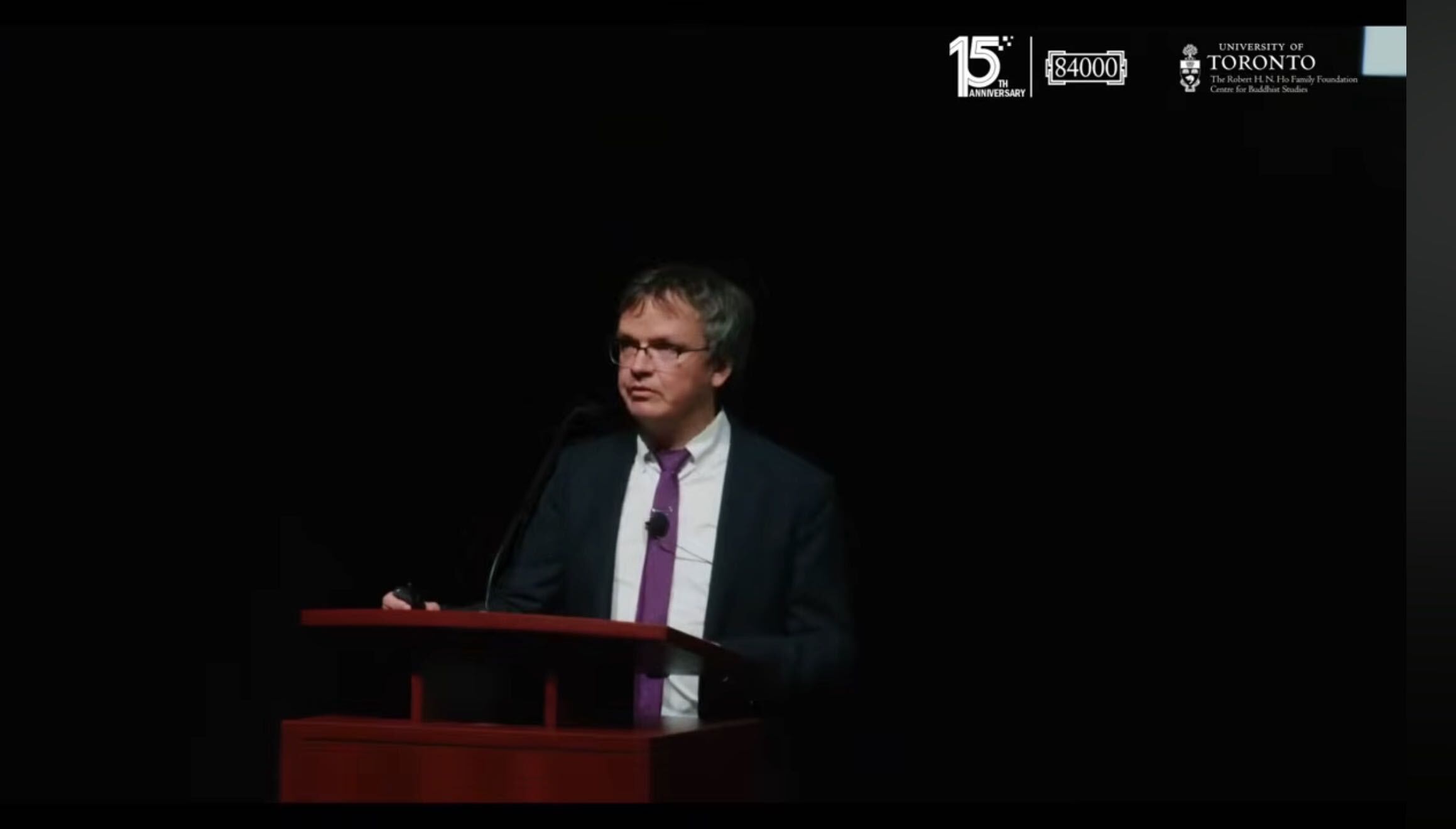
Dr. Rory Lindsay taught a seminar on Tibetan Buddhist canons for a mix of graduate students and senior-level undergraduates at the University of Toronto. Each student chose one 84000 publication, gave a class presentation on it, and wrote a paper about it. The range was wide, from The Heart of the Perfection of Wisdom, the Blessed Mother and The Teaching of Vimalakīrti to The Rice Seedling, The Sūtra of the Sublime Golden Light, and The Uṣṇīṣavijayā Dhāraṇī. Before class discussions, everyone read the introductions to these works and looked for passages they found interesting.
Students relied almost exclusively on 84000’s Reading Room. They started with the introduction to their chosen text, then read it and consulted the notes and glossary, which allowed them to immerse themselves in a canonical text without leaving their dorms. They told Dr. Lindsay they loved having everything they needed in one place online.
One student told him that reading these texts every week made them feel less anxious throughout the semester, giving them a broader perspective and a reason to focus more on helping others and less on themselves.
Next semester, Dr. Lindsay will co-teach the Buddhist Studies Gateway Seminar for graduate students at the University of Toronto with Professor Frances Garrett, and at least one session will focus on 84000's work.
Class: Translation Workshop
Institution: Rangjung Yeshe Institute
Taught by: Dr. Catherine Dalton
Dr. Catherine Dalton teaches Translation Workshop, a course in RYI's MA program in Translation, Textual Interpretation, and Philology, a two-year graduate program that trains students to translate Buddhist texts and undertake original translation research. All of her students are MA candidates in that program. Dr. Dalton assigns 84000's Text Critical Guidelines for Translators, which walk translators through the textual and historical issues behind a Kangyur or Tengyur work, alongside a short 84000 translation from whatever genre the class happens to be reading, to give students a sense of one way to translate, introduce, and annotate a canonical text. She also always reads an as-yet-unpublished Kangyur text with them in Tibetan. In class, students bring their own translations for critique from Dr. Dalton and their classmates, working through questions of accuracy, clarity, and readability, while the class also selects and translates a text together, discussing its history and place in the broader tradition.
For students training to translate, seeing how a finished translation project makes its choices matters. "They had access to see how we have chosen to study and present these texts in this project," Dr. Dalton says, "which provides an example of one way to do this."
Whether you're a student, a professor, an aspiring translator, or simply curious, these resources are yours to explore. The Reading Room is 84000's open library: Hundreds of texts spanning the Tibetan Buddhist canon, organized by the categories that have structured the tradition for centuries, free to browse by section, search by topic, or simply wander. For deeper study, the Scholar's Room offers tools for close research: multilingual views in Tibetan, Sanskrit, and English; side-by-side translation comparisons; a glossary service; and full-text search across the canon. Both are free and open to anyone, anywhere.

Mariana connects diverse audiences with 84000's content in ways that are accessible, relevant, and inspiring.