Buddhist lineages preserved a shared body of teachings in different languages as the tradition spread, then developed their canons independently. A look at how the Pali, Chinese, and Tibetan collections relate.
.png)
Extracts from the Pali Canon and Qualities of the Buddha (detail). Thailand, late 18th century. Chester Beatty, Dublin (CBL Thi 1341). Public domain.
If you read the sūtras as part of your practice, you've probably noticed that the same discourses can turn up across different Buddhist canons—in Pali, Chinese, Tibetan, and Sanskrit—and wondered how these collections fit together. As more of this literature becomes available in modern translation, the question only grows: where did each text come from, and which ones pass between traditions? It's exactly the kind of close reading we hope for, and exactly the kind of question this series exists to answer.
"Ask the Translator" is a new series in which members of our translation and editorial team respond to questions from readers. Whether you're working through a difficult concept, puzzling over a specific passage, or sitting with something that doesn't sit right, we invite you to write to us at [email protected].
This time, a reader wrote to us about something many practitioners wonder about as they read the sūtras: how the various Buddhist canons relate to one another, and whether the same texts appear across them. Serkan, a practitioner in Turkey, had read that the Tibetan tradition drew on Sanskrit sources rather than the Pali line preserved by the Theravāda, and wanted to know whether any Pali suttas had, in fact, made their way directly into the Tibetan Kangyur. Dr. David Fiordalis, a member of our translation team, replies.
Are the Pali suttas (the five Nikāyas) included in the Kangyur and studied in the Tibetan tradition? I understand the Chinese canon preserves the Āgamas, which correspond to the Pali Nikāyas, and that English translations of the Āgamas are now available. I try to read and understand the sūtras as part of my practice, but I’ve read that the Tibetan tradition draws not from the Pali line preserved by the Theravāda, but from the Sanskrit line of the Mūlasarvāstivāda and other early schools, with no direct Pali-to-Tibetan translations in the Kangyur. Could you clarify?
Serkan Tuncay, Turkey
Thank you for getting in touch! It’s wonderful to have the opportunity to answer questions from practitioners like you who have made a commitment to study and practice. This question gets at something many readers wonder about: how the various Buddhist canons relate to one another, and whether the same texts appear across them. Thank you for asking it, and for reading the sūtras so closely.
Reading the sūtras can play an important role in supporting a person’s practice and understanding of the Dharma, but the range of literature preserved across languages—in Tibetan, Chinese, Sanskrit, and Pali—can be quite overwhelming. Moreover, as ancient literature becomes increasingly available in accessible modern translations, it can be difficult to know how all the different sources relate to one another and where to focus one’s attention.
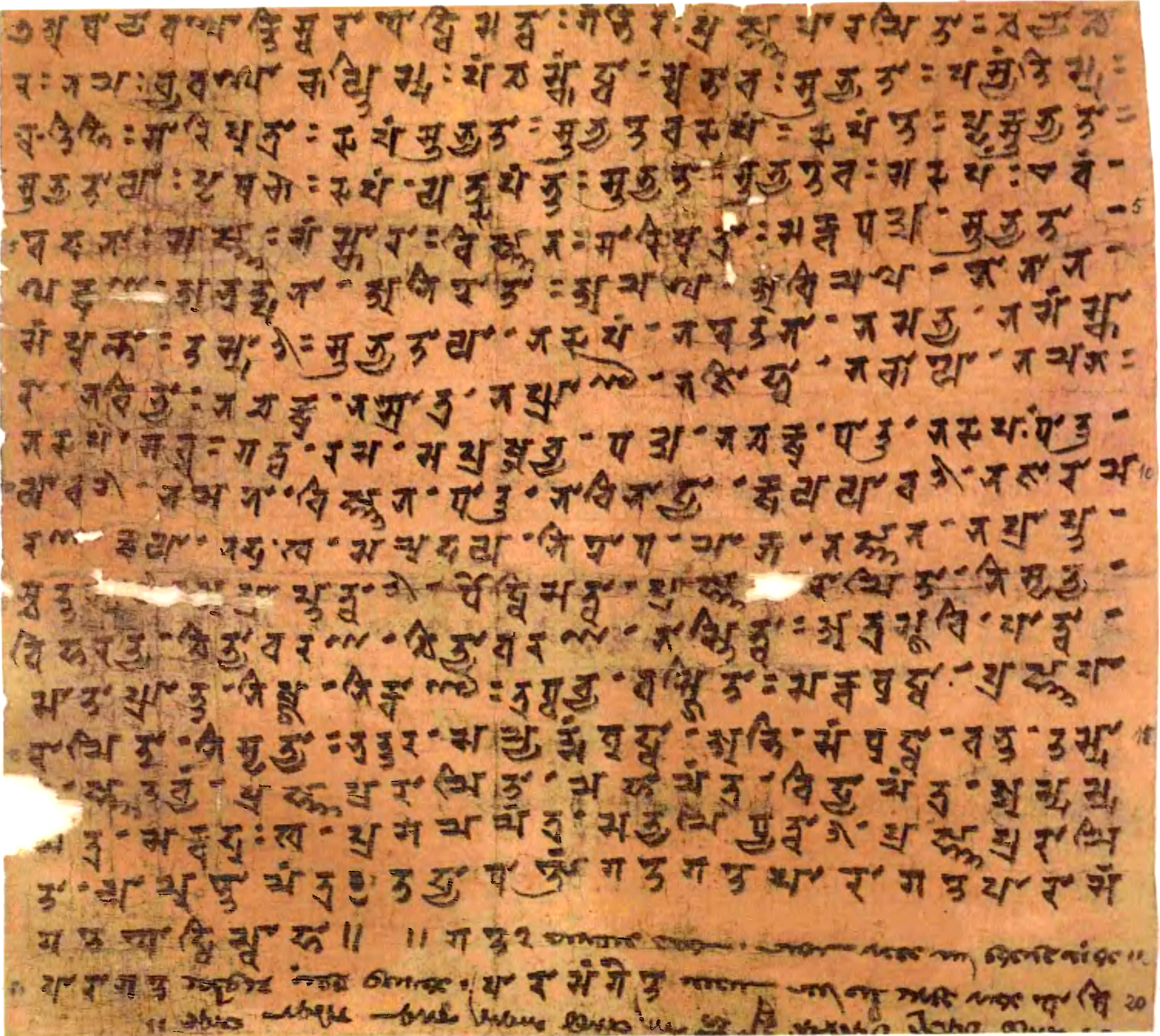
You asked about the relationship between the Pali suttas, the Chinese Āgamas, and the Tibetan literature preserved in the Kangyur, and whether any of the Pali suttas were translated into Tibetan and included in the Kangyur. The short answer is yes! Some suttas and a couple of other works preserved in the Kangyur were very likely translated directly from Pali. Let me provide some background so you can better understand how the literature contained in the Kangyur relates to the Pali canon and the Chinese Buddhist canonical literature.
As Buddhism spread during the Buddha’s lifetime and in the first several centuries after his death, several monastic lineages developed, each with their own collections of canonical literature. What remains of this literature, both in the original languages and in translation, shows that these collections shared many similarities but also had distinctive elements in content, organization, and the languages in which they were preserved. Some monastic traditions, such as the Mūlasarvāstivāda, preserved their canons in Sanskrit, while others did so in a variety of what are called Prakrit languages, which are related to Sanskrit in the same way that old Italian or Spanish, for example, is related to Latin. For instance, the Theravāda lineage that grew to prominence in Sri Lanka and spread throughout Southeast Asia preserved its canon in a Prakrit language called Pali, while the Dharmaguptaka and Sarvāstivāda traditions prominent in the northwest of the Indian subcontinent used other Prakrit languages, such as Gandhari. The main point is that many Buddhist lineages used a variety of languages to preserve a shared canonical literature, which they then developed independently of one another.
This brings us to the Chinese translations and their relationship to the Pali canon. While the four Āgamas translated into Chinese around the fourth and fifth centuries CE correspond roughly in content to the Pali suttas contained in the four main Nikāyas (the Saṃyutta, Aṅguttara, Dīgha, and Majjhima Nikāyas), the Chinese translations were most likely made not from the Pali texts of the Theravāda tradition, but from the canonical collections of other Buddhist lineages preserved in other Prakrit languages. For example, the Madhyama Āgama, which corresponds roughly to the Majjhima Nikāya of the Pali canon, was translated into Chinese in the late fourth century by the Kashmiri monk Gautama Saṅghadeva and a team of collaborators. Scholars believe that the language of the source text used for this translation was a Prakrit language and that the text likely stemmed from the Sarvāstivāda lineage. Thus, the considerable overlap in content between the Pali Nikāyas and the Chinese Āgamas is due instead to the general commonalities among these collections of the Buddhist discourses.
%2C_13th_century%2C_Dayton_Art_Institute.JPG)
The fifth Nikāya of the Pali canon is the Khuddaka Nikāya (The Miscellaneous Collection), and it contains a variety of other important works, such as the Dhammapada, the Suttanipāta, the Udāna, the Jātaka, and various other works in prose and in verse. A few of these works also have Chinese translations, though it is unlikely that any were made directly from a Pali source. An early Chinese translation of a version of the Dhammapada, classified as Taishō 210, has been said to have been translated at least partially from Pali, though various doubts have been expressed about this hypothesis. Indeed, it is more probable that no classical Chinese translation was made directly from Pali. This, at least, is the conclusion reached a few years ago by the late Charles Willemen, who worked closely with this material for many decades. However, scholars continue to debate the question.
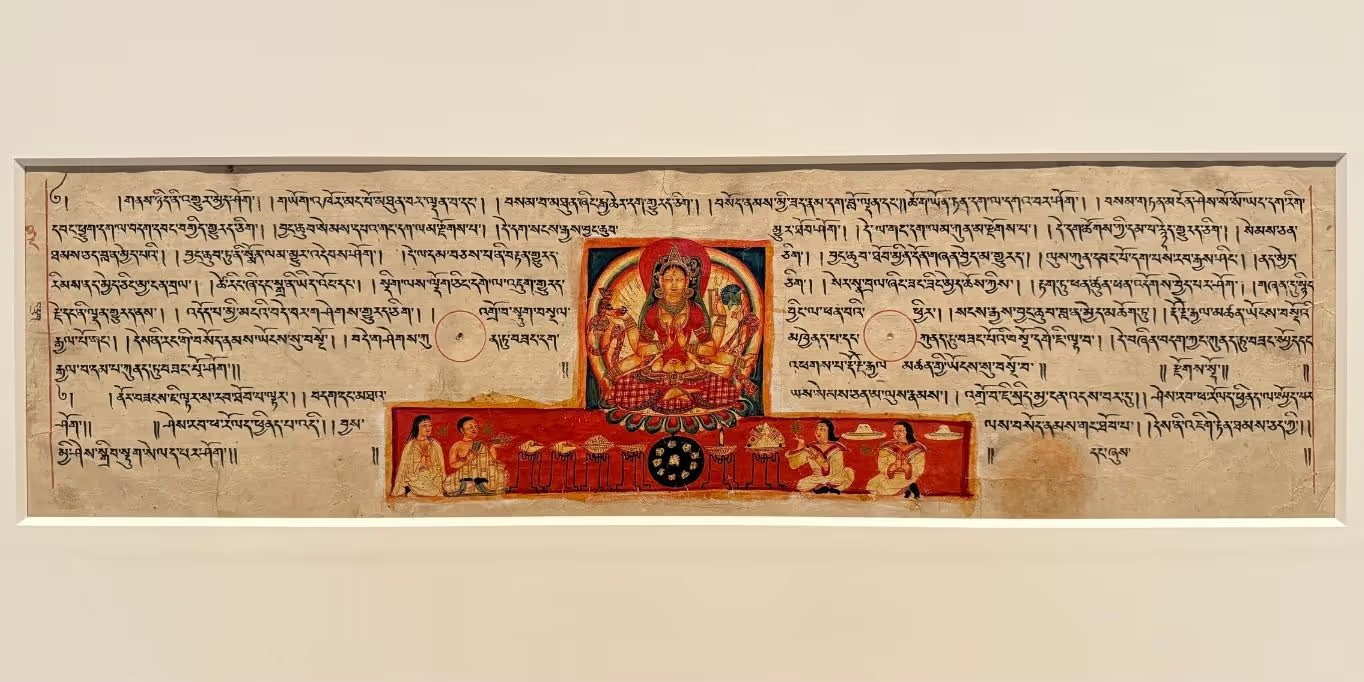
In any case, the Tibetan translations found in the Kangyur and Tengyur began to be produced around the end of the eighth century, just as the main period of Chinese translation activity was drawing to a close. Consequently, and despite considerable overlap between them, the Tibetan canon contains translations of many texts not translated into Chinese, and vice versa. The four main Āgama collections are an example: They were not translated as a whole into Tibetan, but some individual discourses found in them were translated, probably from Sanskrit parallels. Another example is the Udānavarga (Toh 326), which bears a close relationship to the Dhammapada discussed above. Although the Tibetan translation was not made directly from a Pali source, we can find parallels for much of its content in the Pali Dhammapada and in other works of the Pali canon. The 84000 translation of the Udānavarga, for which I served as translator, has recently been completed and will hopefully be published in the Reading Room in the next year or so. When it is, you will be able to trace some of the many parallels from our notes. Much more remains to be said about the complex relationships that exist among the various canonical works of Buddhist literature in Pali, Chinese, Tibetan, and Sanskrit, but at least this much helps highlight the special status of those few texts in the Kangyur that do seem to have been translated directly from Pali.
.jpg)
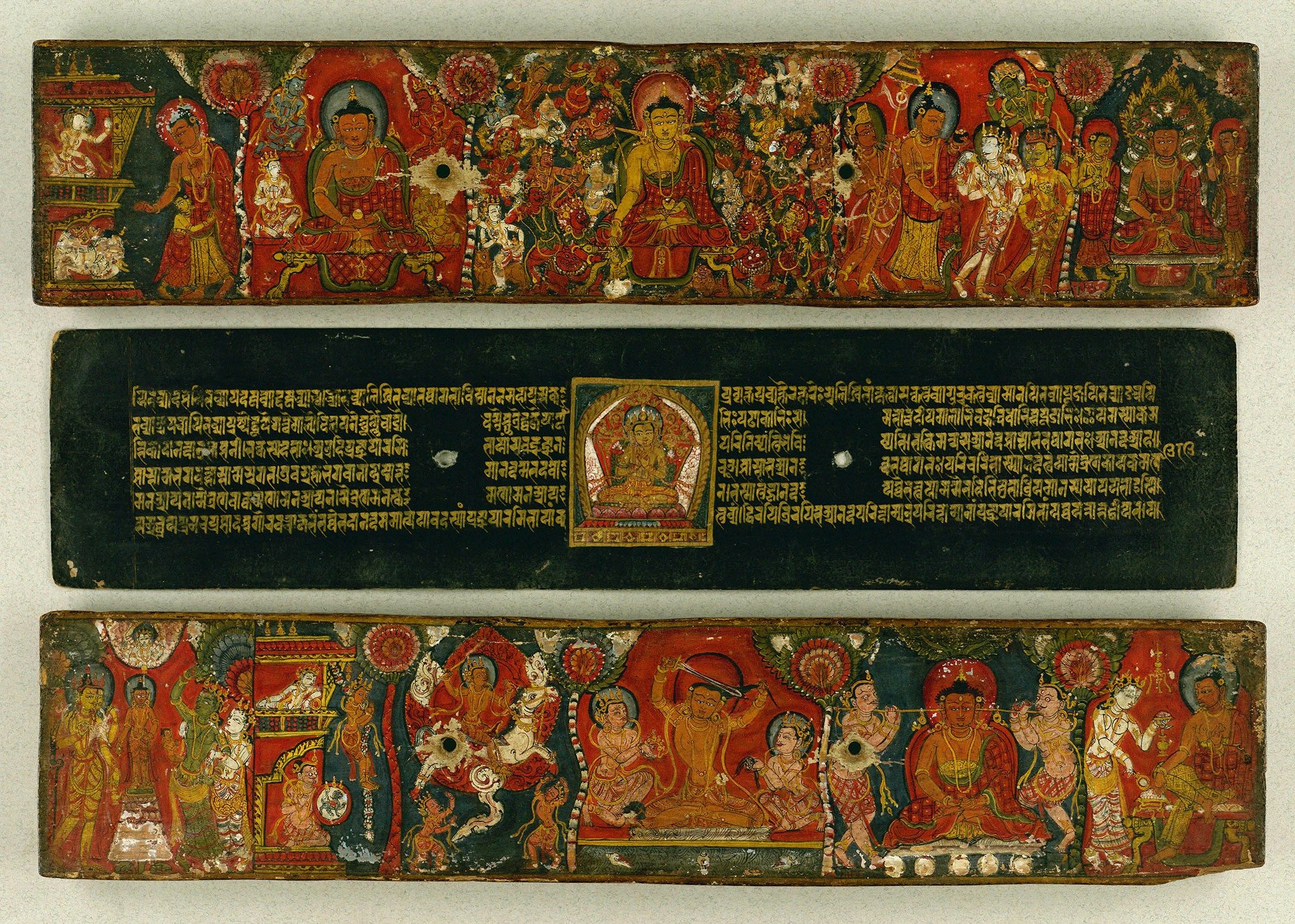
In the early fourteenth century, thirteen works (Toh 31–43) were translated from Pali into Tibetan by Nyima Gyaltsen Palsangpo, a respected Tibetan translator and scholar of Indian languages, along with a scholar monk from Sri Lanka named Ānandaśrī. These thirteen works became the last group to be added to the Kangyur. For some, like The Turning of the Wheel of Dharma (Toh 31) and The Discourse on Great Auspiciousness (Toh 43), alternate versions appear elsewhere in the Kangyur, which were likely translated from Sanskrit parallels. Others, such as The Setting for the Jātaka Tales (Toh 32), are translations of unique Pali works and found only in this section of the Kangyur. While much about the translation of these works remains unknown, the fact that these translations were made at all testifies to a strong interest in the heritage of Buddhist literature in Pali among Tibetans who came into contact with it. We have already published three of these works (Toh 37, 41, and 42) in the 84000 Reading Room. In addition, we recently finished English translations of seven more texts (Toh 31, 32, 36, 38, 39, 40, and 43), for which I also served as translator. These translations are currently in the process of being prepared for digital publication on the website. To see how these seven texts fit together, take a look at this overview article we've just published. Our translation of the final three works is also in progress.
—David Fiordalis, Research Editor & Translator at 84000.co
Bibliography
Anālayo. A Comparative Study of the Majjhima-nikāya. 2 vols. Taiwan: Dharma Drum Publishing Corporation, 2011.
Nattier, Jan. “On Two Previously Unidentified Verses in Zhi Qian’s Hybrid Dharmapada.” Annual Report of the International Research Institute for Advanced Buddhology (ARIRIAB) 26 (2023): 215–52.
Willemen, Charles. “Any Chinese Translations of Theravāda Pāli?” The Indian International Journal of Buddhist Studies 22 (2023): 227–36.

Dr. David Fiordalis joined 84000 in 2022 after more than twenty years in higher education, most recently as associate professor and chair of the Department of Religion at Linfield University. He earned his doctorate in Asian Languages and Cultures from the University of Michigan, and his work reflects a lifelong interest in the histories, cultures, and religions of South Asia and the Himalayan region.