Photographer James Gritz reflects on twenty years of traveling the sacred Buddhist pilgrimage circuit in India and Nepal. He explores how these ancient sites transcend history to offer seekers a direct, transformative encounter with wisdom in the present moment.
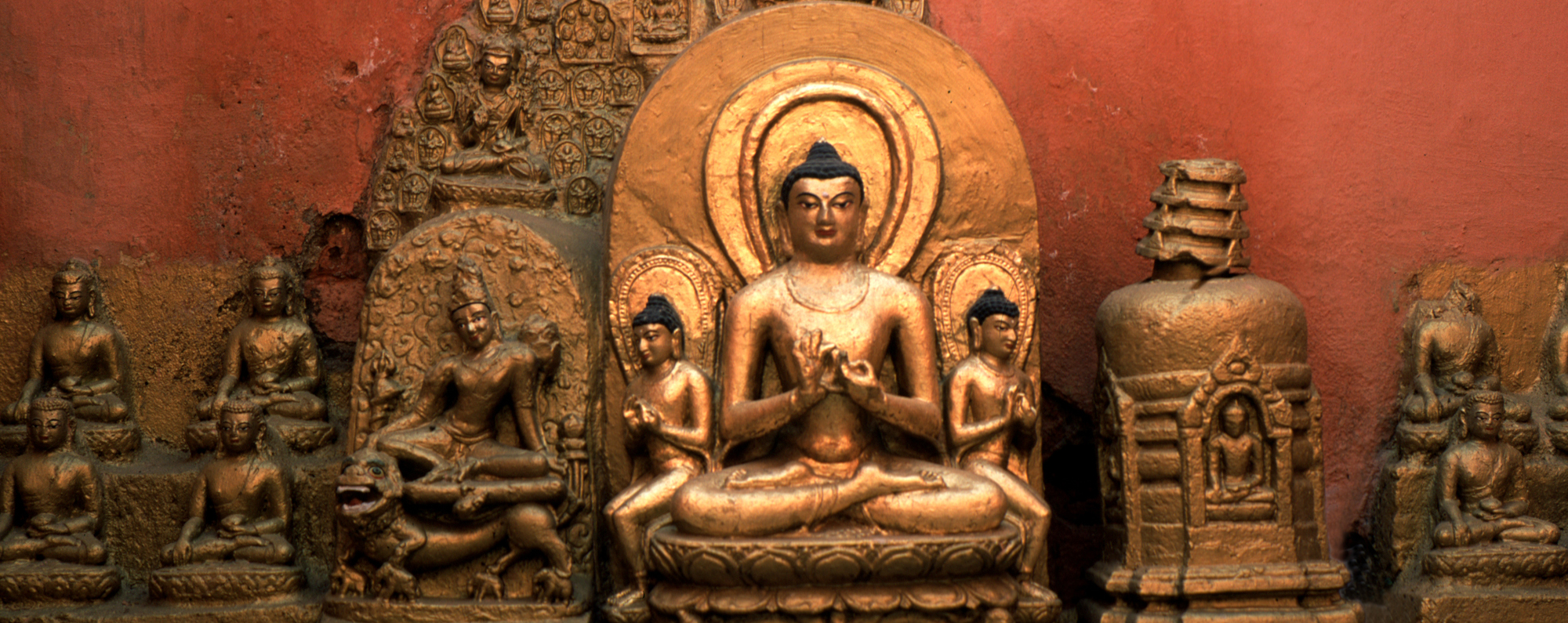
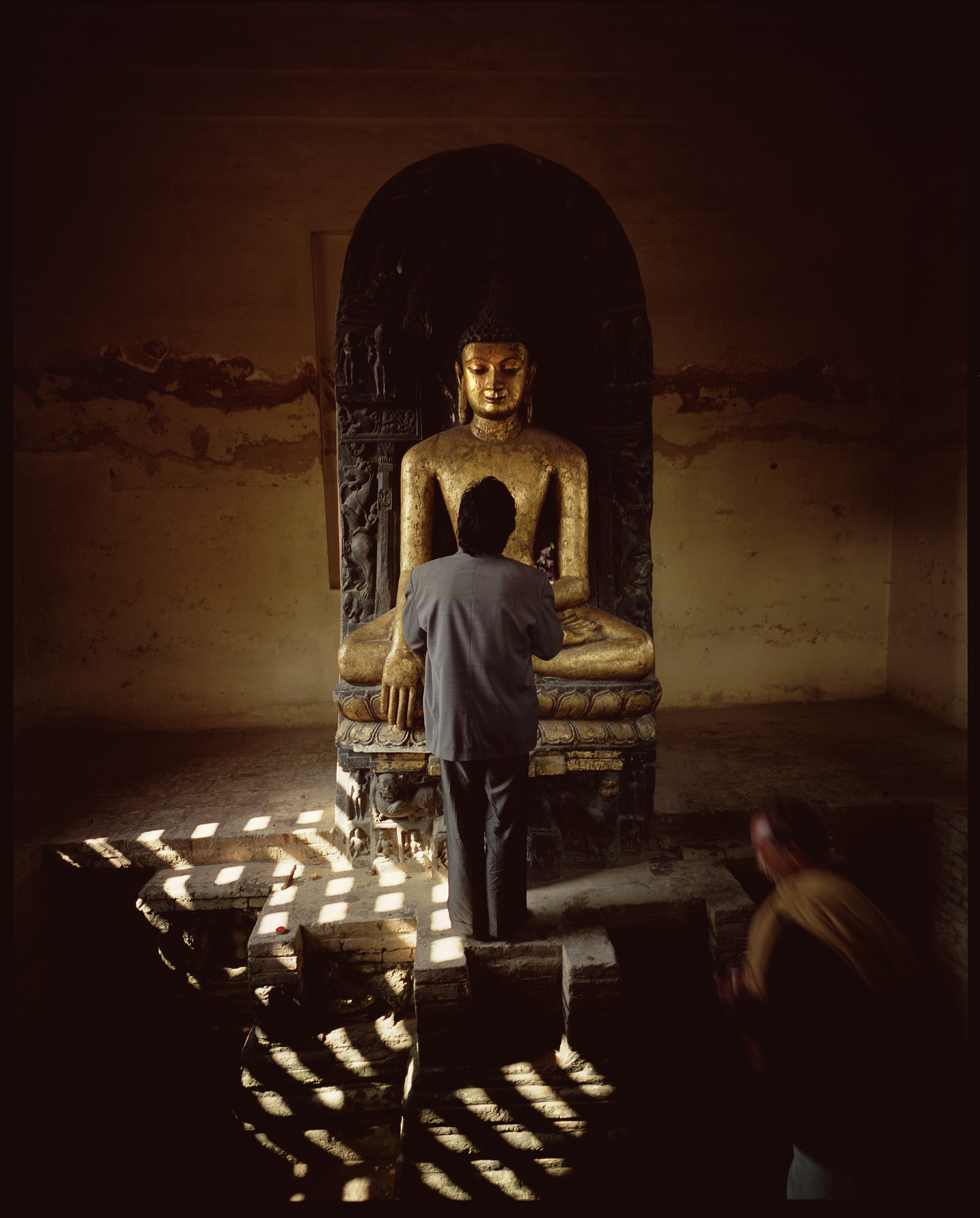
Statues in a small chapel within the grounds of the Mahabodhi Temple complex, Bodh Gaya. Photograph by James Gritz.
Over the past twenty years, I have made the Buddhist pilgrimage circuit in India and Nepal seven times: alone, with my son Arthur when he was nineteen, with teachers, and with a film crew shooting Never Give Up, a documentary on the 17th Karmapa. I have never arrived and found what I expected.
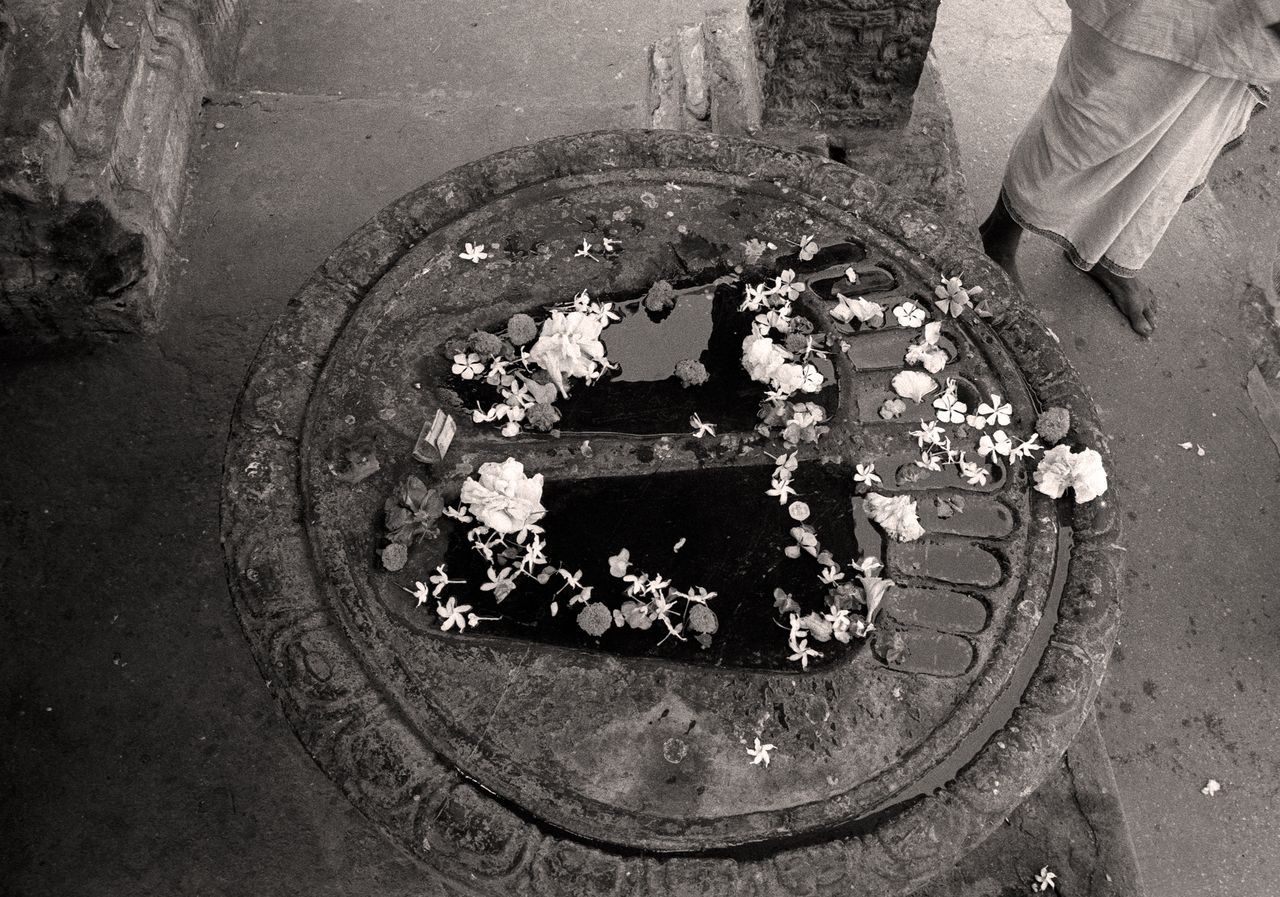
The idea of pilgrimage came from the Buddha himself. Before passing into Mahāparinirvāṇa, he pointed his followers toward four places that might serve as sources of inspiration after he was gone. As recorded in the Pali Mahāparinibbāna Sutta, he said:
"There are four places, Ānanda, that a person should visit and look upon with feelings of reverence. Here the Tathāgata was born. Here the Tathāgata became fully enlightened. Here the Tathāgata set in motion the wheel of the Dharma. Here the Tathāgata passed away into the state of Nibbāna in which no element of clinging remains."
By the time of King Aśoka, four more sites had been added: Śrāvastī, Sāṃkāśya, Rājagṛha, and Vaiśālī, each associated with the Buddha's principal teachings and miracles. Together they form the Eight Great Places of pilgrimage, a circuit that has drawn seekers from across Asia and beyond for over two thousand years.
What draws people to these places is not easy to explain. You arrive carrying whatever you came with—your questions, your losses, your practice, your skepticism—and something shifts. These sites do something to the mind that planning cannot.
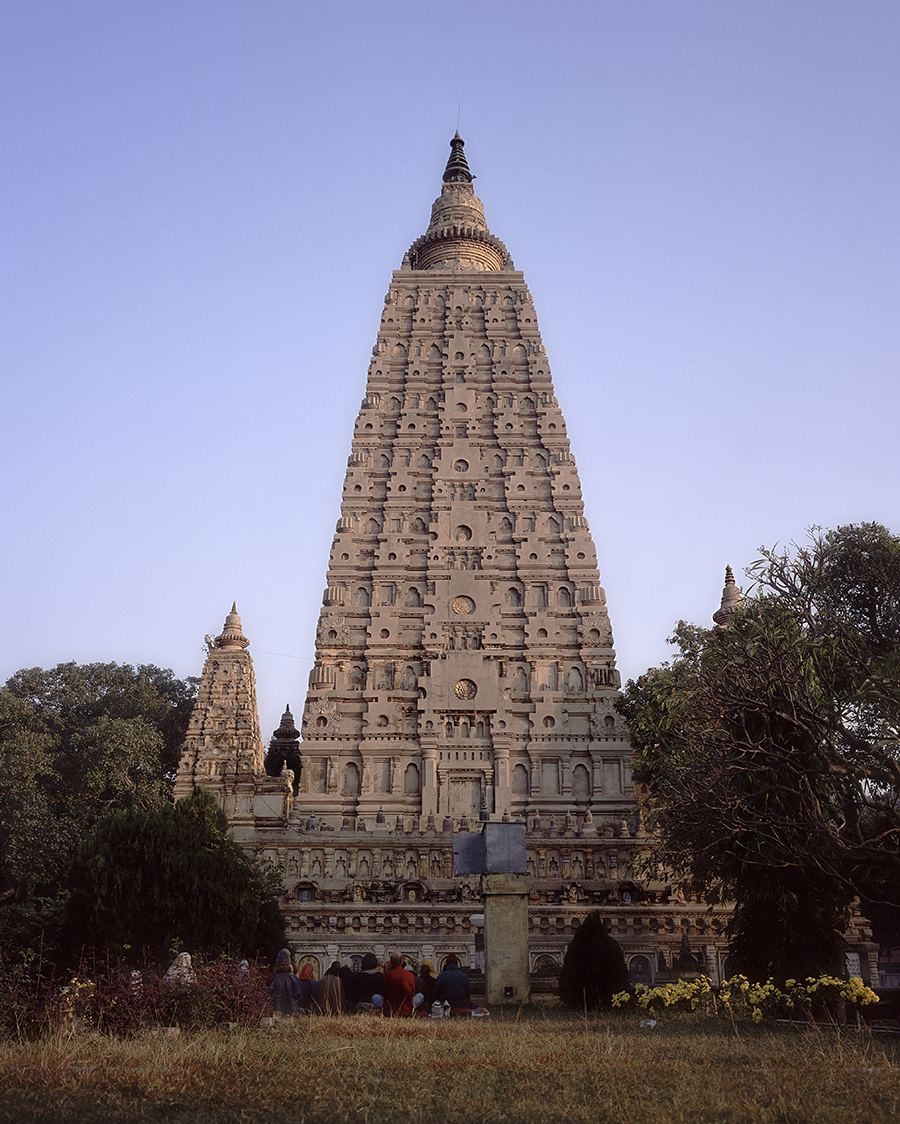
At Bodh Gaya, I attended teachings at Shechen Monastery with Jigme Khyentse Rinpoche, Rabjam Rinpoche, and Dzigar Kongtrul Rinpoche. Afterward, Jigme Khyentse and I walked together to the Mahabodhi Temple to circumambulate the stūpa. Circumambulation—the practice of walking clockwise around a sacred monument as an act of devotion—is one of the oldest and most widespread traditions in Buddhism, observed across cultures and continents, and one of the principal acts pilgrims perform at every sacred site. Its meaning is spelled out in The Verses on Circumambulating Shrines, where, in response to a question from Śāriputra, the Buddha said:
Circumambulation is an act of the body.
Circumambulation is an act of speech.
Circumambulation is an act of the mind.
Circumambulation is also the making of a vow.
Here, one easily achieves through circumambulation
Goals that are difficult to reach.
Mere words cannot well convey,
Even slightly, the virtues of those
Who perform a circumambulation
At a shrine of the World Protector.
Bodh Gaya remains the center of the Buddhist world. Sitting beneath the Bodhi Tree—a descendant of the original, brought to Sri Lanka by Aśoka's daughter Saṅghamittā—or walking the circumambulation path around the Mahabodhi Temple at first light, something becomes available that is hard to find elsewhere. It is not the history, exactly, though the history is staggering. It is something in the quality of attention the place calls forth that stills the mind before you have even decided to sit.
Walking with Jigme Khyentse Rinpoche at the Mahabodhi Temple was itself a teaching. We found a quiet corner facing the Bodhi Tree, beneath which the Buddha is said to have sat when he attained enlightenment, and sat in silence for a while. Before I got up to leave, he told me I should make impermanence my post-meditation practice. It was not a formal teaching. It was simply what the place and the moment called forth. He is one of my principal teachers, and I have carried those words with me ever since.
During that same trip, we traveled to Rājagṛha, where the Buddha gave the Prajñāpāramitā teachings. It is the very mountain the sutras describe: "The Blessed One was residing on Vulture Peak near Rājagṛha, with a large monastic gathering comprising some five thousand monks." Standing there with Jigme Khyentse Rinpoche, Rabjam Rinpoche, Dzigar Kongtrul Rinpoche, and Ven.Matthieu Ricard, where the Buddha himself had taught, was one of those moments that resists description. The place held something. We all felt it.
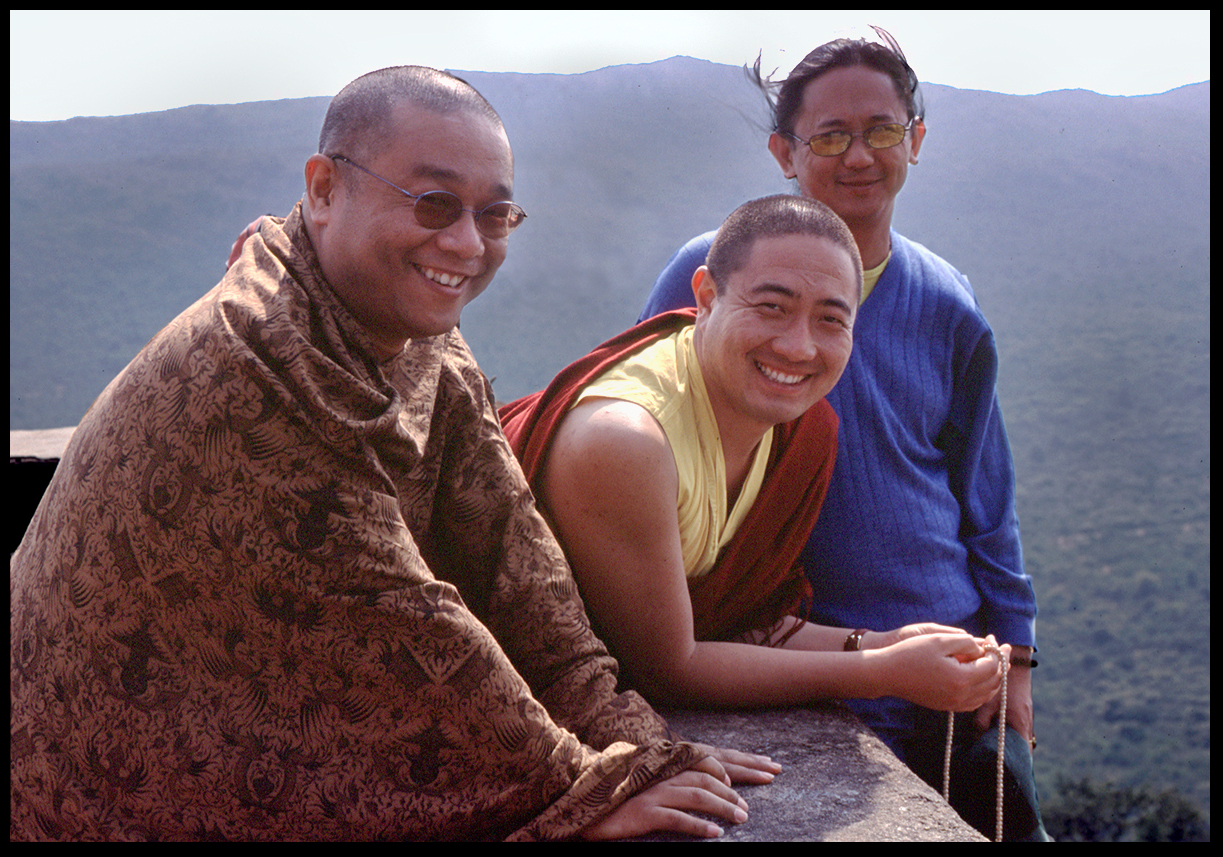
The Prajñāpāramitā, or Perfection of Wisdom sūtras, are among the most celebrated teachings in the Buddhist canon. The Perfection of Wisdom sūtras open with words familiar to practitioners everywhere: "Thus did I hear at one time." Standing there ourselves, that ancient opening felt less like history and more like a description of the present moment. The Buddha's instruction to those gathered was direct: "Bodhisattva great beings who wish to attain consummate buddhahood with respect to all phenomena in all their aspects should persevere in the perfection of wisdom."
These moments of unexpected encounter are, in some ways, what pilgrimage is for. "The Stem Array," a chapter from A Multitude of Buddhas Sūtra, contains one of Buddhism's great pilgrimage narratives: the story of Sudhana, a young seeker who travels in search of truth and meets more than fifty teachers along the way, among them a child, a prostitute, a sea captain, and a goldsmith. The teaching is not that wisdom comes from expected sources, but from wherever you happen to be standing, and whoever happens to be in front of you.
At Kushinagar, Dzongsar Khyentse Rinpoche and I crossed paths in a restaurant. He invited my son and me to join him and his group at the stūpa for offerings and prayers. When it was time to leave, Rinpoche asked if we wanted to accompany him to Bodh Gaya. We had just come from there and were heading to Lumbini. Preoccupied with making photographs for a book on the sacred sites from the life of the Buddha that I was working on, I declined, which I still regret to this day. Sudhana would have recognized the moment. I did not.
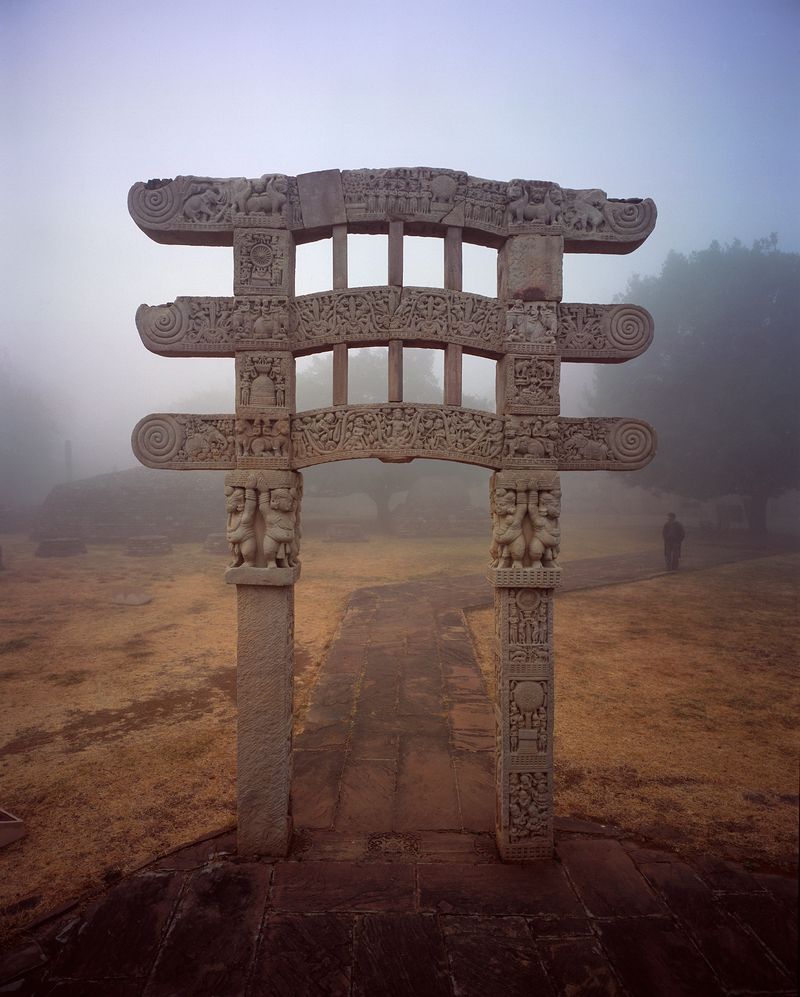
Which brings up a question pilgrimage always eventually asks: what makes a place holy? Is it the place itself, the accumulated devotion of centuries? The teachers we meet along the way? The lessons we absorb, or even the ones we miss?
Dzongsar Khyentse Rinpoche has written that from a Buddhist point of view, a place is holy when it is free from the stain of greed, aggression, and a dualistic mind. And yet, most of us are too clever and skeptical to simply feel this—too caught up in our plans, our itineraries, our cameras. I know this from experience. Which is precisely what makes pilgrimage useful—the sacred geography does something for the mind that ordinary logic cannot comprehend. What makes these ancient sites so alive is that they have been blessed again and again by buddhas and bodhisattvas throughout the ages, and visited by millions of pilgrims over centuries. No one is choreographing a holy site experience. They remain, in his words, free from any trace of a Disneyland mentality.
Pilgrimage, at its heart, is an act of devotion. Dzogchen Ponlop Rinpoche has written that the experience of devotion is not blind faith, but is deeply rooted in wisdom and knowledge. Genuine devotion arises when we develop a firm ground of trust and confidence in our own enlightened heart—ultimately, our commitment to the nature of our own mind. Pilgrimage is one of the traditional methods for cultivating that trust, not by escaping ordinary life but by stepping more fully into what the Buddha taught.
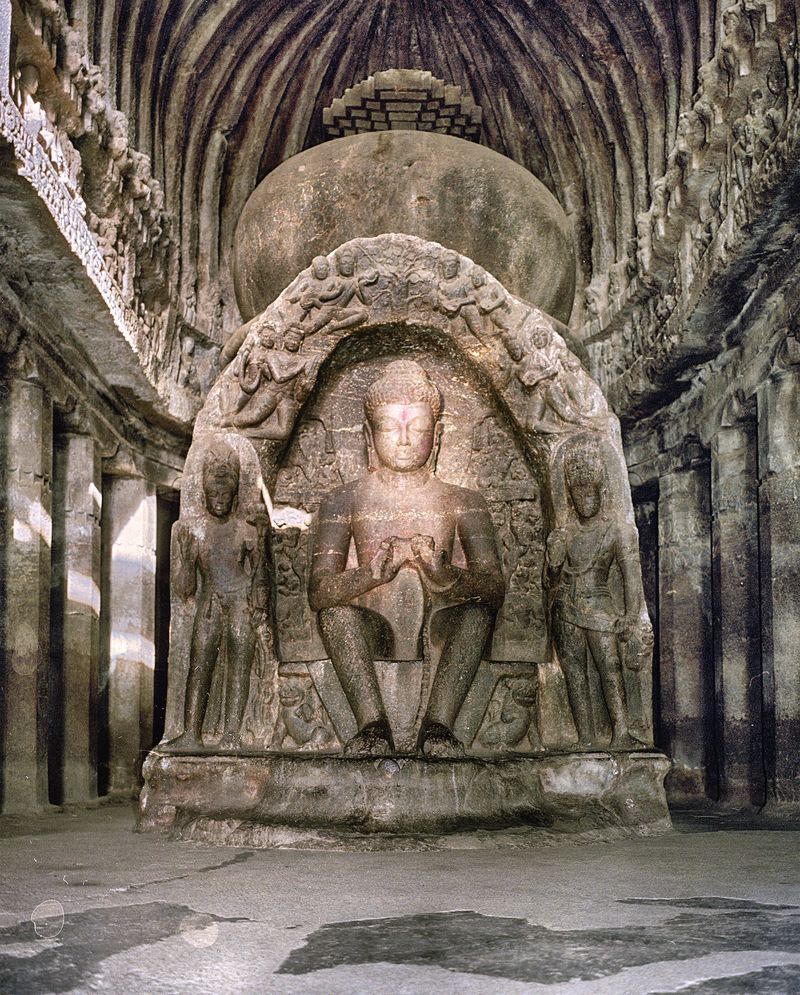
For most of the two thousand years that pilgrims have been making this journey, it was not so easy. Xuanzang, the seventh-century Chinese monk who traveled to India over seventeen years to visit these same sites and bring authentic scriptures back to his homeland, is perhaps the most celebrated of countless seekers who crossed mountains, deserts, and seas to reach these places. Yet the spirit of the journey matters as much as it ever did. As it is taught, phenomenal existence is conditioned, and that conditioning is dependent on motivation. There will always be obstacles on pilgrimage; it comes with the terrain. Confronting them with patience and openness is itself part of the practice.
Each sacred site offers not just a step into history but an invitation to reflect on the Buddha's journey and on our own. Standing here, surrounded by centuries of devotion, pilgrims often find something they did not know they were looking for.
This past February and March, I made the circuit again, this time leading a small group of pilgrims. Standing once more at Bodh Gaya, at Sarnath, at Kushinagar, I was reminded that these places ask the same question every time: are we present, open, and ready to receive what the place and the experience of pilgrimage are offering?
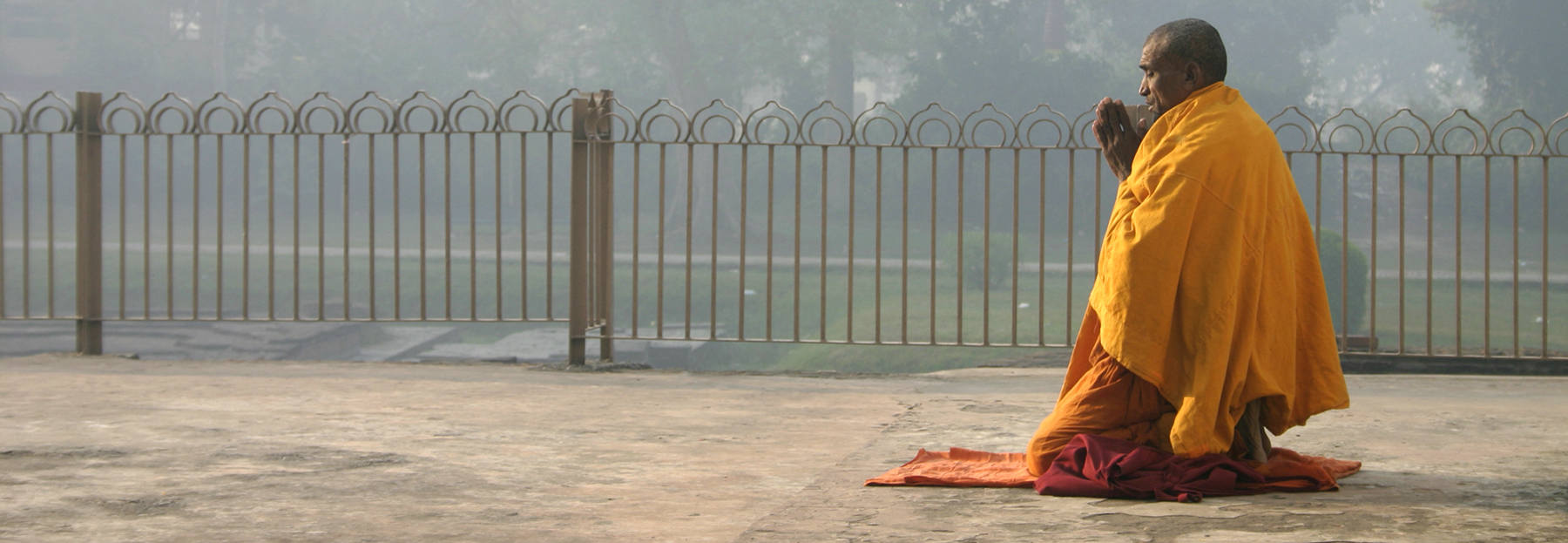
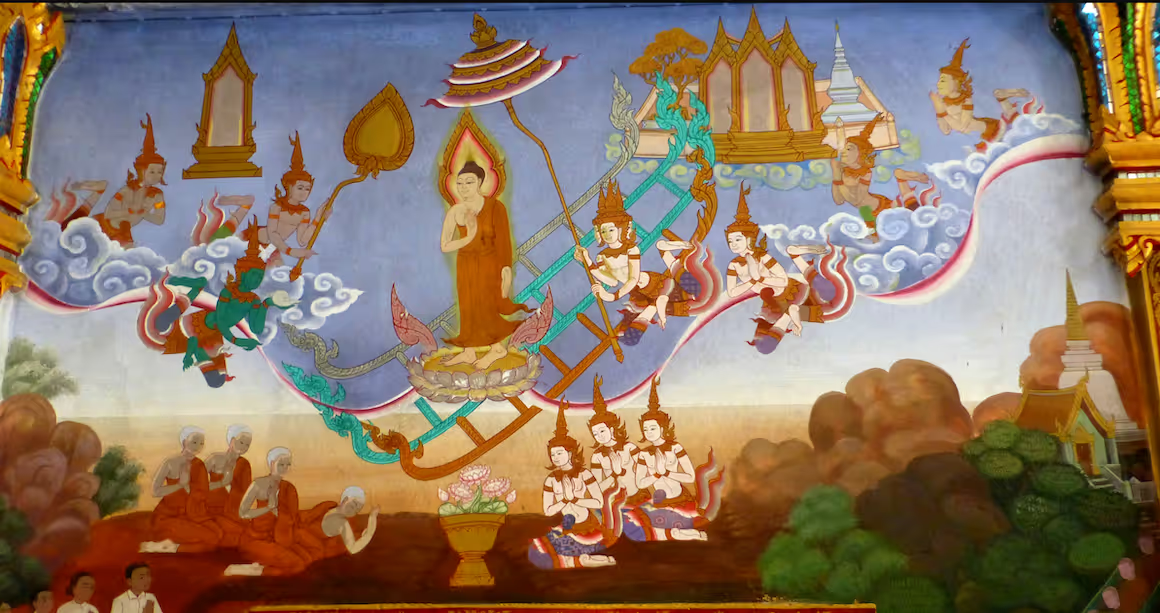
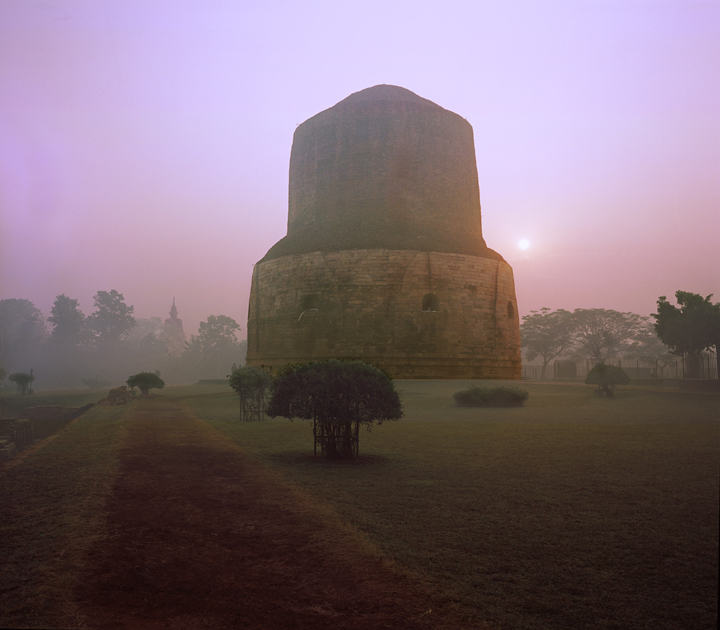
At Sarnath, where the wheel first turned, the Sūtra of the Wheel of Dharma records how the news of that first teaching rippled outward through every realm: "Friends, in the Deer Park at Ṛṣivadana by Varanasi, the Blessed One has turned the wheel of Dharma in three phases with twelve aspects. He has done so for the benefit of many beings, for the happiness of many beings, out of love for the world, and for the welfare, benefit, and happiness of gods and humans." Standing in that same park, under the same sky, it did not feel like ancient history. It felt like a description of what was still happening, what these places are still doing, quietly, for anyone who arrives with some openness and willingness to look.
Simply showing up is already the practice.
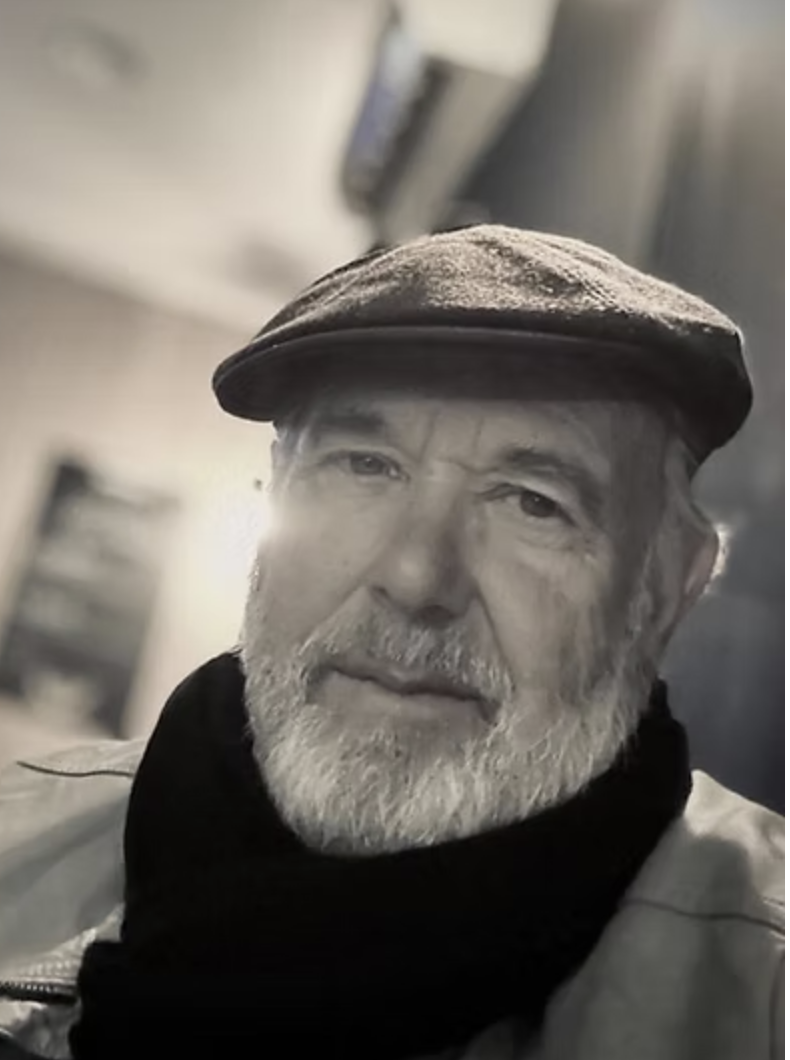
James Gritz is a photographer, author, and filmmaker. For more on his work visit jamesgritz.com.