Dr. Adam C. Krug traces how the Seven Siddhi Texts helped make, maintain, and repair the communities that carried them across centuries, and what that history reveals about how texts live, travel, and shape the people who practice with them.
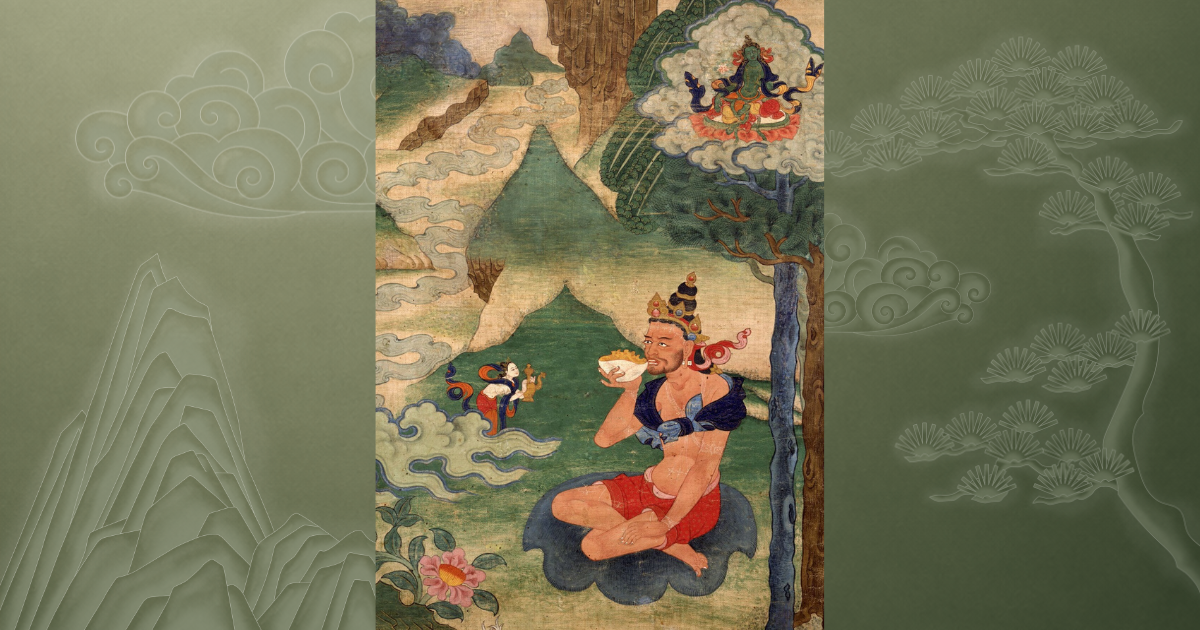
Padmavajra, Mahāsiddha. Wikimedia Commons.
What holds Buddhist communities together? For the Karma Kagyü and Drikung Kagyü, part of the answer lay in a set of Indian texts that arrived in Tibet in the mid-11th century. In this talk, presented at Wolfson College, University of Oxford, as part of the "Padmasambhava, Uḍḍiyāna and Tibet" seminar series, 84000 Associate Translator Dr. Adam C. Krug traces how the Seven Siddhi Texts, seven Mahāmudrā treatises composed by seven Indian masters and associated with the sacred site of Oḍiyāna, helped make, maintain, and at times repair actual Buddhist communities across centuries.
This talk draws from Dr. Krug's research for his newly published book, The Seven Siddhi Texts, published by Wisdom Publications in 2025.
This talk was recorded at Wolfson College, University of Oxford, on June 26, 2026, as part of the "Padmasambhava, Uḍḍiyāna and Tibet" seminar series.

Dr. Adam C. Krug is a translator and editor with 84000 whose work spans genres from avadāna literature to Mahāyāna sūtras, dhāraṇīs, and tantras. Dr. Krug holds a doctorate from UC Santa Barbara, has taught at the University of Colorado Boulder and the University of Memphis, and is the author of The Seven Siddhi Texts (Wisdom Publications, 2025).