The longest Perfection of Wisdom sūtra fills twelve volumes of the Tibetan canon. This one holds the same wisdom in a single letter.
When 84000 shared a new translation, one of the first reactions online was shortest translation ever! Another reaction called it the tl;dr (too long; didn’t read) sūtra.
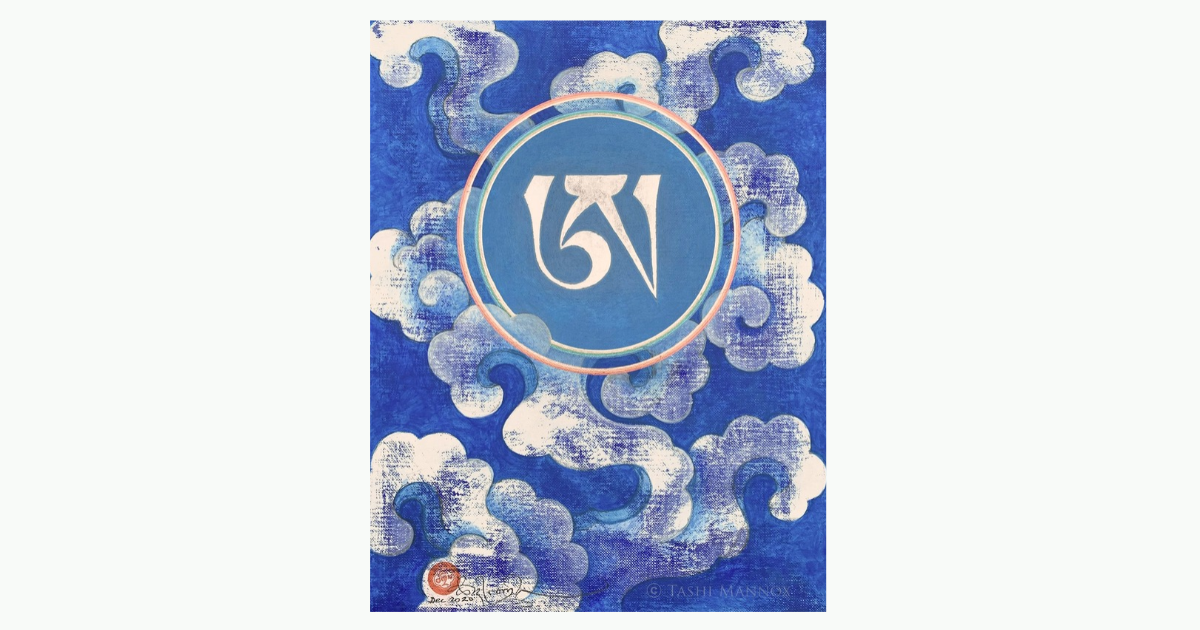
Fair enough. The sūtra is The Perfection of Wisdom in One Syllable, and the syllable is the letter a.
Here is the full text:
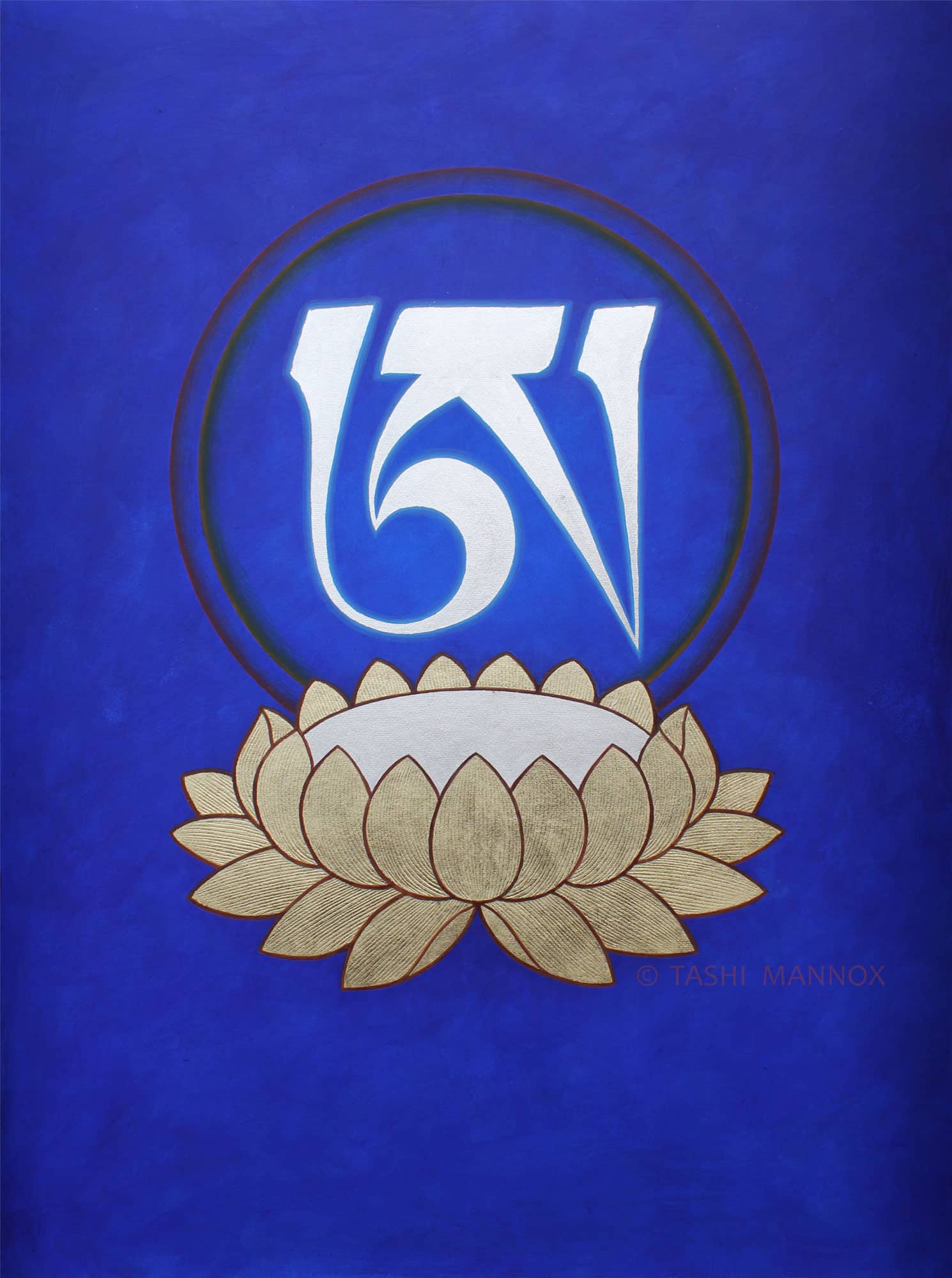
Homage to the Great Mother, the Perfection of Wisdom.
Thus did I hear at one time. The Blessed One was staying in Rājagṛha on Vulture Peak Mountain with a great saṅgha of 1,250 monks and many quintillions of bodhisattvas. At that time, the Blessed One said to the venerable Ānanda:
“For the benefit and happiness of beings, Ānanda, you shall receive the perfection of wisdom in one syllable. It is thus:
a |
When the Blessed One had said this, the venerable Ānanda and all the monks and the bodhisattva great beings realized the perfection of wisdom. They rejoiced and praised what the Blessed One had taught.
This concludes “The Mother of All Thus-Gone Ones, the Perfection of Wisdom in One Syllable.”
You’ll notice that the text is way more than one syllable. We tend to think of sūtras as the Buddha's speech—and they are—but most sūtras include other elements as well. They begin with opening narratives that recount how Ānanda heard the sūtra, and then they set the scene for the teaching. In this sūtra, the setting is Vulture Peak Mountain, a location intimately connected with the Perfection of Wisdom teachings. Sūtras also typically conclude with a formulaic passage in which the audience rejoices and celebrates what the Buddha taught. Sūtras in the Kangyur also begin with an opening homage and end with a colophon—these parts were added by the Tibetan translators and editors. So, even though the Buddha uttered only a single syllable, his teaching is embedded in the literary conventions of sūtras—perhaps like how a fragrant flower belongs in an attractive vase or a rare coin deserves a high-quality display box. By noticing these conventions and other common tropes in Buddhist literature, we can more easily navigate the world of sūtras and gain deeper access to their wisdom.
But what is so special about the syllable a? How can a sound hold meaning at all, let alone a whole path to awakening? Why this letter, and not another? Could a Buddha really teach everything in one sound, and could everyone listening understand it? And what is anyone supposed to do with a text this short?
In the Tibetan tradition, this sūtra is known as “the sūtra of the essence,” as it condenses all of the Buddha’s eighty-four thousand teachings into their most essentialized form as a single letter. This contrasts with the longest sūtra in The Perfection of Wisdom section, The Perfection of Wisdom in One Hundred Thousand Lines, which spans twelve volumes.
Many Buddhist teachings and practices come in “extensive,” “middling,” and “concise” versions. Think Tall, Grande, and Venti, but for the Dharma. You might assume the concise version is the best size for beginners, but tradition says the opposite. The extensive versions are actually better suited for those who need more explanations since they go into greater detail. The concise versions, on the other hand, are said to be for “those of the highest faculties”; in other words, geniuses who can figure everything out with no explanation. So, if the tradition situates the 100,000-line version as the extra-practice-needed version, like The Perfection of Wisdom for Dummies, the single-syllable version may not be as simple as it seems. We can’t just read it once and move on.
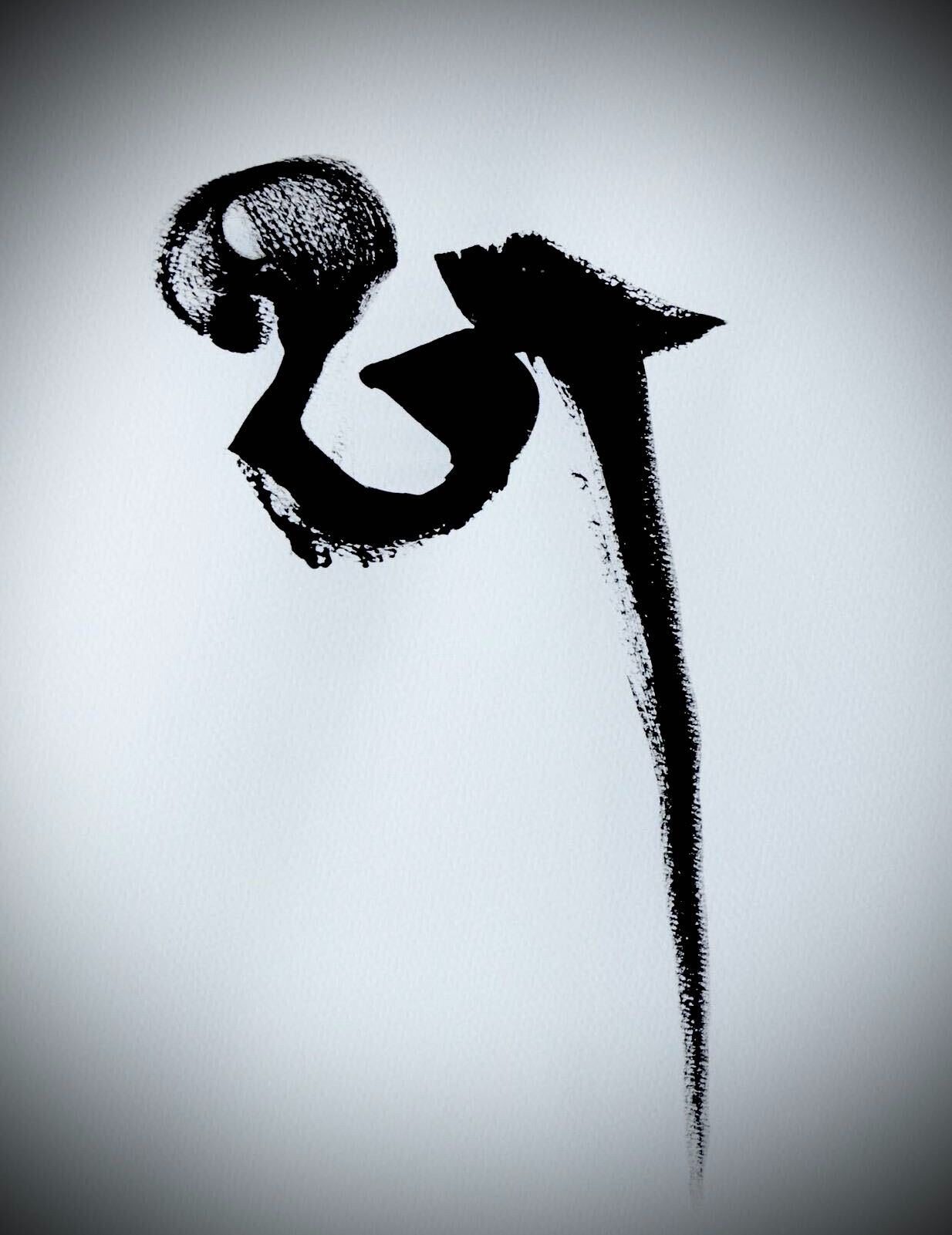
The syllable a is the first letter of the Sanskrit alphabet and is pronounced as “ah” as in “Ah! I realized emptiness!” rather than “eh” like the English indefinite article “a.” Some translators have rendered it as ah or aa to capture this pronunciation, but here we follow the International Alphabet of Sanskrit Transliteration (IAST), the academic standard for romanizing Sanskrit. The syllable a has various levels of meaning and significance in Sanskrit grammar and Indian philosophy of language. It is the first letter of the Sanskrit alphabet, and the sound a is inherently present in all the letters of the Sanskrit alphabet: ka, kha, ga, gha, (et cetera) all have the a vowel sound, and other vowel markers can then be added to change the sound. The sound a is thus sometimes said to generate all sound and pervade all language. The fact that the first sound a baby makes is a is traditionally cited in support of this syllable’s position as the source of all sound and language. In Tibetan culture, there is even a custom of drawing the syllable a with saffron water on a newborn’s tongue to bless their speech.
This idea that the Buddha spoke only a single syllable, yet the many beings assembled understood, in their various languages, the entirety of his manifold teaching, can be traced back to the early Buddhist schools or monastic lineages. The notion that the Buddha taught through a single sound also appears throughout Mahāyāna literature.
Another idea prevalent in Indian philosophy of language is that all existence arises from the sounds of the Sanskrit syllabary. In Sanskrit and other Indic languages, however, the syllable a is also added as a prefix of negation to many nouns, much like the letter “a” in English, as in the word atypical. Thus, on a deeper level, the syllable a is said to represent the negation of existence or the birthlessness (anutpāda) of all phenomena. As such, it is the embodiment of the emptiness of all things—all teachings commonly understood to be central to the Prajñāpāramitā literature. The idea that the syllable a simultaneously represents both the fullness of everything and its emptiness could be said to culminate in the assertion that the Buddha did not utter a single sound, but nonetheless, beings understood his teaching in ways appropriate to each individual. This assertion was expressed perhaps most famously in The Secrets of the Realized Ones.
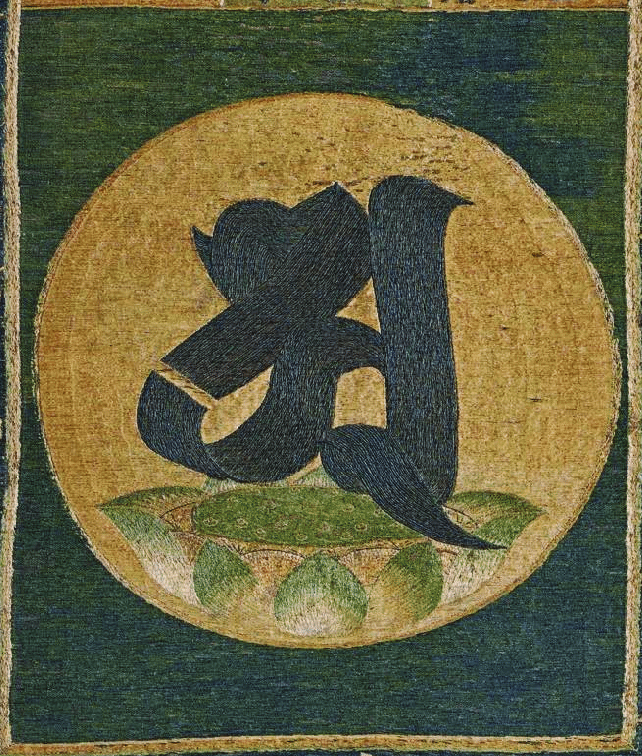
The use of the syllable a as a mantra or dhāraṇī also appears in other sūtras, such as in chapter 12 of The Sūtra of the Meeting of Father and Son, as well as in tantras like Reciting the Names of Mañjuśrī. The syllable a is also the first letter of the arapacana alphabet, which has been employed throughout Buddhist literature, often in an acrostic form, to present key Buddhist teachings and principles. One example appears in The Perfection of Wisdom in Eighteen Thousand Lines, which says of the syllable a, “The letter a is the gateway to all dharmas because they are unproduced from the very beginning (ādyanutpannatvād).” Similar presentations of the syllable a in a sequence appear in The Teaching on the Great Compassion of the Tathāgata and The Play in Full.
In short, The Perfection of Wisdom in One Syllable is one instance in a long tradition of Buddhist scriptures that use the syllable a (or other syllables) to reveal the intersection of language and causation, and to express the otherwise ineffable nature of ultimate reality.
Read the full translation, with the Tibetan alongside, in the Reading Room.
For another very short text in the same family, try The Heart of the Perfection of Wisdom, the Blessed Mother (Toh 21).
Translated by Lowell Cook, who also wrote the introduction (adapted here). Edited by David Fiordalis. Copyedited by Ibby Caputo.